TriplePundit • Signs Point to a Bright Future for U.S. Green Steel in 2026
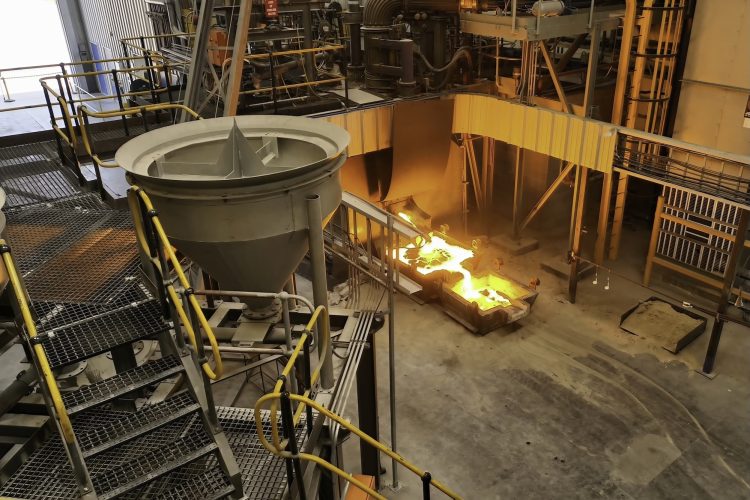
U.S. steel manufacturing is on the upswing following a decades-long decline, even as federal environmental protections start to weaken. That has raised concerns over the potential for increased greenhouse gas emissions and other airborne pollutants from this energy-intensive industry. A fresh round of investor activity indicates the rise in green steel production could offset those impacts, driven by a series of technology improvements leading to the full decarbonization of steelmaking.
The U.S. steel industry rises again
Steel production in the United States fell into a long period of decline following a peak in 1969. Some analysts attribute falling U.S. production to the industry’s failure to keep up with more efficient technologies adopted in Japan and elsewhere over the course of the 20th century. In more recent years, though, U.S. producers introduced new technologies that make steel cheaper to produce while lowering environmental impact.
Those innovations include lower-carbon, electric arc “mini-mills” designed to recycle steel scrap, helping to reduce the industry’s traditional dependence on coal. Conventional blast furnaces use a coal derivative called coke as fuel to heat iron ore up to more than 1,000 degrees Fahrenheit to create molton iron (also known as pig iron), the primary material used in steel. Using electricity rather than coke fuel and replacing mined iron ore with recycled scrap both significantly lower emissions — and costs — compared to conventional steelmaking.
Advancements like these helped U.S. producers reduce carbon emissions by 37 percent per ton of steel since 1990, the trade organization American Iron and Steel Institute estimates.
But there is still much work to be done. About 70 percent of U.S. steel is now produced in electric arc furnaces, but 30 percent still comes from conventional furnaces. Electric arc technology is not emission-free, as researchers at Oak Ridge National Laboratory noted in a 2021 analysis, though it creates only a third of the greenhouse gas emissions produced by conventional blast furnaces for steelmaking. The researchers also noted that conventional blast furnaces in the U.S. are less carbon-intensive than the global average due to technology upgrades.
Despite these improvements, steelmaking still makes up an estimated 2 percent of U.S. greenhouse gas emissions, a small but significant amount that could grow in the coming years. Some analysts anticipate the recent decline in imported steel will provide the domestic industry with a new opportunity to increase production. As production climbs, the limited supply of scrap steel for electric arc furnaces could inhibit further growth in low-carbon steelmaking.
Can green hydrogen fill the gap?
Green hydrogen is among the decarbonization solutions under consideration to maintain low-carbon steelmaking amid a revival in the industry. Whereas most hydrogen is produced from natural gas, green hydrogen is made from water in electrolysis systems powered by wind, solar, and other renewable resources.
Green hydrogen is a new industry, and water electrolysis faces stiff competition from the low-cost, conventional hydrogen sourced from natural gas. Upon taking office in January of 2025, U.S. President Donald Trump began pulling back federal funding that supported the domestic green hydrogen industry, but the Texas-based startup Hertha Metals illustrates how green steel stakeholders and investors can get a running start on the transition.
Since 2024, Hertha Metals has been operating a pilot plant in Texas that can produce 1.1 U.S. tons of steel per day in a coal-free process, funded by $17 million raised from the well-known investment firm Khosla Ventures among others. “Compared to traditional coal-based methods, Hertha’s process is not only 30 percent more energy efficient, but significantly cheaper — and even more cost-competitive than production in China,” Hertha says.
Instead of coal, Hertha’s system relies on natural gas and electricity. The system is also designed to run on hydrogen, enabling the company to switch seamlessly to a cleaner fuel if and when available. Last summer, Hertha announced plans to scale up production in a new facility that can produce more than 30 tons per day, with over 1,750 tons per day as the next milestone.
Domestic innovation, global influence
Hertha’s technology can produce high-grade iron in addition to steelmaking. Another U.S. startup in the low-carbon iron field, Electra, is also moving forward with plans to decarbonize steel and other iron-dependent industries. Electra uses a prorietary process based on chemical reactions and renewable energy to produce iron from ore, replacing high-heat blast furnaces powered by coke.
Last spring, the Colorado-based company announced a Series B funding round of $186 million, co-led by Capricorn Investment Group and the Singapore firm Temasek Holdings. Along with other investment firms, the round attracted interest from global iron- and steel-makers and supply chain stakeholders including the investment branch of BHP along with Rio Tinto, Roy Hill, and Nucor and among others.
The new round of funding will support the construction of a demonstration plant in Colorado, leading to the potential for global impact.
A third U.S. startup, Boston Metal, is also aiming for global impact with the support of overseas investors for its own coal-free, electricity-based process. In July, the company raised $51 million from existing investors BHP Ventures, Breakthrough Energy Ventures, Piva Capital and the investment branch of SiteGround, a web hosting firm based in Bulgaria.
The funds will go to bring Boston Metal’s facility in Brazil into the revenue-producing phase this year. The Brazil plant deploys Boston Metal’s coal-free Molten Oxide Electrolysis (MOE) process to extract niobium, tantalum, tin, and other valuable materials from mining waste. In 2025, Boston Metal also commissioned its first MOE system for decarbonizing steel. “Located at the company’s Woburn, Massachusetts headquarters, the industrial cell is now producing tonnage steel and represents a critical step toward deploying Boston Metal’s first MOE Steel demonstration plant,” the company reported.
In September, Boston Metal announced an agreement with the leading Finnish stainless steel producer Outokumpu, aimed at applying the MOE process to reclaim waste from steelmaking. The reciprocal understanding also calls for Outokumpu to supply materials needed to scale up the MOE process for steelmaking.
Additional support from the federal government is needed to help accelerate progress, but in the meantime, global investors are stepping in to fill the gap.
Featured image: Hertha Metals


Post Comment