What the Data Is Signaling
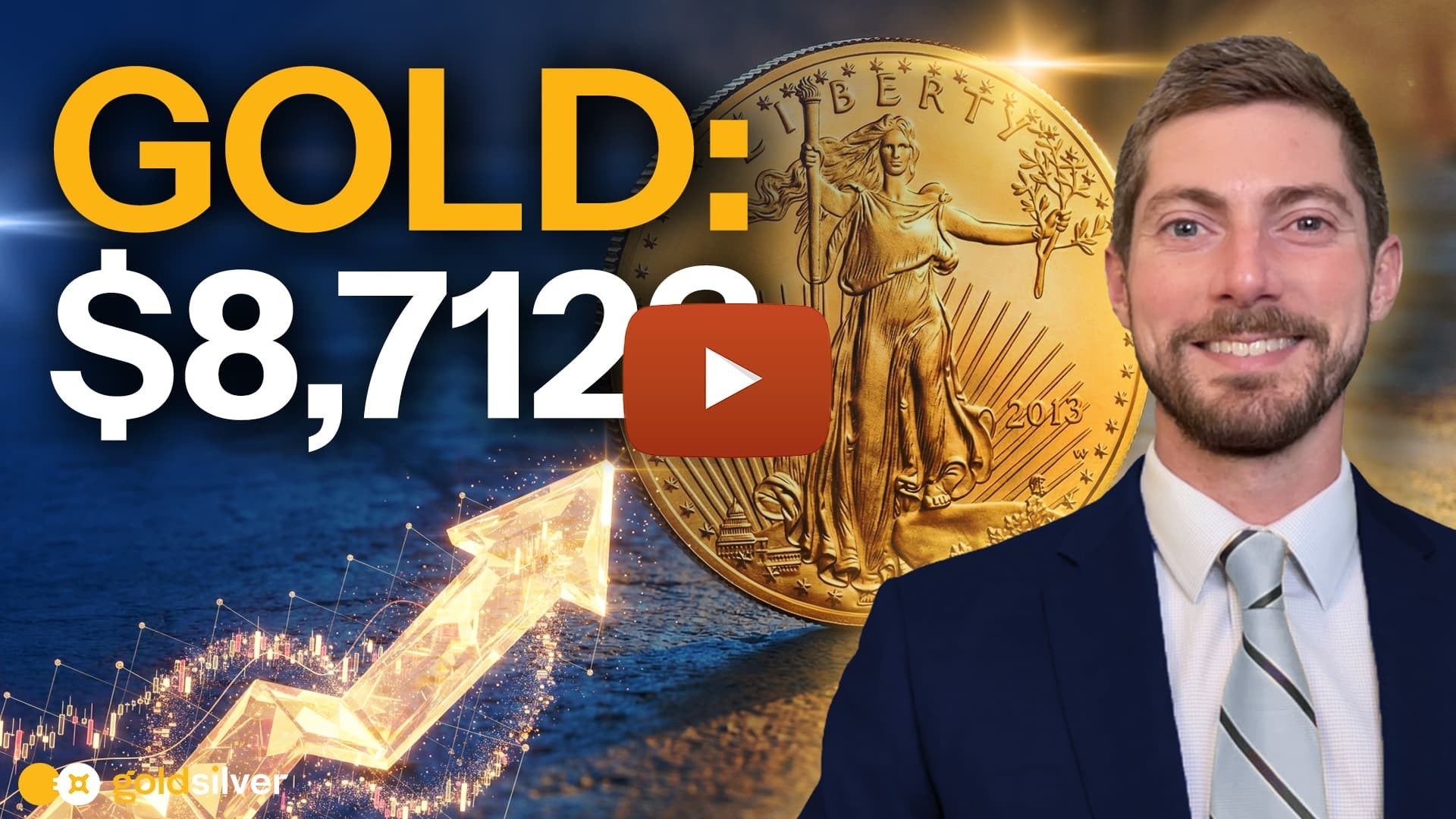
Gold moving above $5,000 an ounce has one immediate implication: most of the price targets coming out of big banks and Wall Street research desks are already obsolete — and it’s only January.
That’s not because gold is behaving irrationally. It’s because many forecasts never grappled with the real driver of gold prices: supply and demand. When you zoom out and focus on those fundamentals, today’s price action starts to make a lot more sense — and it raises an important question for investors looking ahead to 2026.
Why Is Gold Going Up? The Demand Shock Behind $5,000 Gold
Gold supply is remarkably boring — and that’s precisely why price moves can be so dramatic.
Mine supply grows at roughly 1–2% per year, and it barely responds to higher prices. You can’t flip a switch and double global production just because demand surges. New mines take years — often decades — to bring online.
That means when gold prices move sharply, it’s almost always because demand has changed, not supply. To understand where gold could go next, we need to look at the three forms of demand that actually move the needle: central banks, investment bars and coins, and ETFs.
Central Banks: From Sellers to Aggressive Buyers
For much of the 1980s and 1990s, central banks were steady sellers of gold — a major reason gold languished for decades. That regime quietly ended around 2010.
Since then, central banks have been net buyers of gold. For years, purchases averaged roughly 500 tons annually. But starting in 2022, that figure more than doubled to over 1,000 tons per year.
The catalyst was clear: when Western governments froze Russia’s foreign exchange reserves, it sent a global message. Reserves held in other people’s currencies can be weaponized. Gold can’t.
For central banks seeking assets with no counterparty risk, gold has reasserted itself — and that shift appears structural, not cyclical.
ETFs Are Flashing Crisis-Level Demand
Gold ETFs tend to tell a different story — one driven by investor psychology.
ETF inflows surged during the 2008 financial crisis, collapsed during the post-2011 risk-on period, then spiked again during COVID in 2020. After four years of outflows, many assumed investors had moved on.
Then came 2025.
ETF inflows exploded to levels exceeding 2008 and approaching COVID-era peaks. That’s not complacency. That’s crisis behavior. When you combine ETF demand with ongoing central bank buying, the result is striking: total monetary and investment demand jumped 62% above its long-term average.
With supply growing at 1–2%, price is the only variable left that can adjust.
Why Demand Is Surging — And Why It May Persist
Several forces are converging:
- Geopolitical risk and sanctions are rising, not falling.
- Sovereign debt and fiscal deficits continue to expand.
- The idea of “risk-free” bonds is quietly unraveling.
- Political pressure to cut rates and inflate debt away is global.
- Physical gold tightness creates a feedback loop — once scarcity becomes visible, urgency increases.
These aren’t short-term headlines. They’re structural pressures. And investors should ask a simple question: will these forces be stronger or weaker by 2026?
A Historical Lens on Gold’s 2026 Potential
History doesn’t repeat perfectly, but it often rhymes.
During the late stages of the 1970s bull market, gold rose more than 120% in a single year. Silver surged over 400%. Those moves didn’t happen at the beginning of the cycle — they happened near the end.
In 2025, gold rose roughly 64% and silver about 146%. If this bull market follows a similar trajectory, the strongest percentage gains may still lie ahead.
When today’s bull run is overlaid on the 1970s cycle using a logarithmic scale, the alignment suggests a possible gold price near $8,700–$9,000 before the end of 2026. That’s not a prediction carved in stone — but it is a data-driven base case grounded in supply, demand, and precedent.
Where This Leaves Gold
Gold above $5,000 isn’t a sign the move is over. It’s a sign that the old frameworks are breaking.
Whether prices ultimately reach those levels or not, the forces pushing investors toward gold are real, persistent, and global. And when even voices from the banking establishment begin to acknowledge that reality, it’s worth paying attention.
Watch the full video to see the charts, data, and historical comparisons behind this analysis.
Investing in Physical Metals Made Easy
People Also Ask
What is the gold price prediction for 2026?
Based on supply-and-demand trends and historical precedent, gold could be significantly higher by 2026 than it is today. In the video, Alan shows how similar bull markets — especially the 1970s — saw gold more than double near the end of the cycle. Watch the full analysis on GoldSilver to see the data and charts behind this outlook.
Why has gold gone above $5,000 an ounce?
Gold’s move above $5,000 is being driven by a surge in demand, not supply. Central banks are buying at record levels, ETF inflows have returned to crisis-era highs, and mine supply is only growing 1–2% per year.
Are central banks still buying gold in 2025 and 2026?
Yes — central banks have been net buyers of gold since 2010, and purchases more than doubled after 2022. This shift accelerated after foreign reserves were frozen, highlighting gold’s lack of counterparty risk.
Could gold really reach $9,000 by 2026?
It’s not a guaranteed outcome, but historical comparisons suggest it’s within the realm of possibility. When today’s bull market is overlaid with the 1970s run on a logarithmic chart, the alignment points to prices near $8,700–$9,000 before the cycle ends. The full context and visuals are covered in the GoldSilver video.
Is silver expected to outperform gold in this bull market?
Historically, silver tends to outperform gold during the later stages of precious metals bull markets. In the 1970s, silver rose more than 400% in a single year, and in 2025 it already outperformed gold significantly.


Post Comment