What a Decade of Climate Negotiations Teaches Us About Adaptation
With the adoption of the landmark Paris Agreement in 2015, the world entered a new chapter in the global response to climate change. Much of the attention focused on cutting emissions and setting ambitious national targets. Yet just beneath the surface of that historic moment, a quieter but equally urgent truth surfaced: Global climate action success would hinge on local governments’ ability to adapt to the impacts already locked into the system.
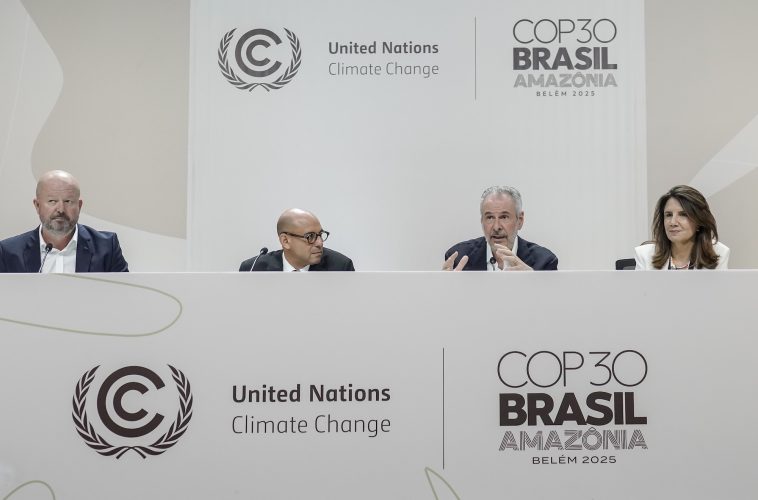
A decade later, the outcomes that emerged from the most recent United Nations climate talks (COP30) in Belém, Brazil, underscore how prescient that insight has proven to be. Adaptation, which often felt like an undercurrent in Paris, has moved unmistakenly to the center of the global climate conversation.
Across the two weeks of negotiations, adaptation threaded through nearly every major debate. Delegates wrestled with how to refine the Global Goal on Adaptation that was established in the Paris Agreement, working to narrow hundreds of potential indicators into a more actionable set. The question of how to finance adaptation — tripling the current level of investment that developing countries sought — loomed large over progress on all other issues. And the science, from health impacts to agricultural losses, sharpened the picture of a warming world in which extreme heat, drought, and flooding are no longer abstract global risks but local realities reshaping daily life.
What stood out in Belém was how often the conversation returned to implementation on the ground. No longer is adaptation described in broad generalities. It is rooted in place. The debates about indicators and finance were always, implicitly, about the communities that will rely on those frameworks. The city confronting chronic heat waves. The coastal county evaluating storm-surge risks. The small-town utility grappling with drought.
Initiatives launched alongside the negotiations reinforced this shift, including the Global Mutirão Against Extreme Heat, through which 185 cities committed to scaling local cooling strategies. Localities also entered new partnerships supporting methane reduction, agricultural resilience, and health system preparedness.
This intensifying focus aligns with what many of us practitioners have observed over the past decade: Mitigation may be global, but adaptation is inherently local. The risks manifest block by block — through infrastructure built for a different climate, stormwater systems pushed beyond capacity, homes unprepared for extreme heat, and small businesses vulnerable to disruption. Paris highlighted this dynamic, and Belém confirmed it.
For local governments, the implications are clear. Climate risks are escalating faster than many existing systems were designed to handle. Economic disruptions associated with extreme weather now reverberate through housing markets, insurance availability, public health systems, and local budgets. At the same time, adaptation has emerged among the strongest investment opportunities of the next decade as global estimates show returns far exceeding the cost of action. Cities and counties that plan ahead stand to improve not only safety and resilience, but also competitiveness, fiscal stability, and long-term economic vitality.
Belém also underscored how essential local knowledge and data have become. Whether through hyperlocal heat mapping, neighborhood-level flood modeling, or community-driven planning, decision-making increasingly is grounded in residents’ lived realities. Many of the health and heat-focused initiatives highlighted at COP30 placed trusted local messengers and local risk assessments at their core, a recognition that adaptation succeeds only when it reflects community context.
A clearer picture emerges today. Global climate commitments become meaningful only when they translate into local action. And local action requires tools, funding pathways, and decision frameworks that match the capacity and responsibilities of the public servants executing them. As the world debates financing structures and indicator lists, local governments remain responsible for protecting people, infrastructure, and economic continuity today — not at some future point when negotiations reach consensus.
Belém offers reasons for both optimism and urgency. Adaptation’s prominence is unmistakable, and the recognition of cities and counties as essential actors has never been stronger. Yet progress on indicators and finance remains incomplete, and the gap between global ambition and local need continues to widen.
So, what does the next decade portend? It will be defined by how effectively communities translate national and international commitments into resilience on the ground. That work is already underway in jurisdictions across the country. They are applying resilient building standards, hazard mitigation plans that unlock implementation funding, community-based heat strategies, and economic development planning that integrates climate reality.
If Paris set ambition, Belém acknowledged reality. And reality points in one direction. Local governments are no longer peripheral to the global climate story, but are the central protagonists. While the world has spent 10 years defining what climate ambition looks like, the decade ahead must center on giving local leaders the resources, tools, and support to put adaptation into action. The future depends on it.
Image credit: Cop30 Brasil Amazônia/Flickr (press use only)



Post Comment