TriplePundit • This Startup Retrofits Buildings Using As Few New Materials As Possible
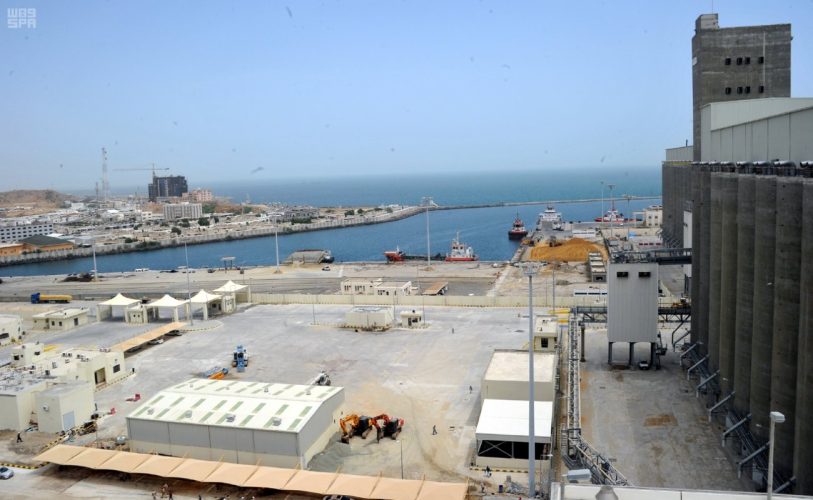
Bharain-based startup, GeoStruxer was recently commissioned to engineer a solution to shore up the foundation of a 12,000 square meter grain warehouse that was dangerously unstable. It did so in a way that reduced the need for new materials by 70 percent and potential carbon emissions by 80 percent over more traditional solutions.
Using Bentley Systems’ software, artificial intelligence tools and third party data, the startup maintained the nine-year-old structure in the most effective, efficient and sustainable way. It’s one of many engineering solutions GeoStruxer designed using those three qualities at guideposts.
The grain warehouse is located in Jazan, a port city that lies in the southwest corner of Saudi Arabia on the shores of the Red Sea. It’s a region known for its problematic geological conditions — like earthquakes, flooding and unstable soil — which means maintaining the built environment here is an existential challenge.
“I would call it the geotechnical Bermuda triangle,” says Hamzah M.B. Al-Hashemi, CEO of GeoStruXer.
A few years after the grain warehouse was constructed, building operators noticed that serious deformation was taking place thanks to unstable ground beneath it. Cracks were appearing in the structure and measurements found ground deformation, or shifting, had reached 170 millimeters, putting the building at great risk.
Four different engineering firms were brought in to evaluate the situation, and while there was a significant amount of disagreement as to how to address the problem, the initial solution proposed was to install 2,700 stabilizing micropiles beneath the structure. A micropile is typically a small column of steel lattice and high-strength cement, which is bored into the ground to create a strong foundation.
GeoStruXer took a different approach to the project. While it considered 2,700 micropiles excessive, more importantly, it felt a better starting point would be to gain a proper understanding as to how the structure deformed over time so it could get a more accurate sense of how to arrest further shifting.
The problem was, the only information the team had initially was the single measurement of 170 millimeters of deformation, a static one-time measurement of limited value. How could the team recreate the incremental shifting that had occurred since construction?
“The only solution available to us was to use a satellite,” Al-Hashami told TriplePundit. “There is the Sentinel 1 satellite from the European Space Agency, and we used a technology called InSAR, which allowed us to travel back in time to 2014. And from that, you can get the deformation of the building accurately.”
InSAR (Interferomatic Synthetic Aperture Radar) uses radar data taken at different times and positions, and it is able to measure millimeter-scale movement of the ground shifting over time. Using archived data, this technology allowed the team to build a picture of the actual incremental deformation over the period since the structure was built.
GeoStruXer then used Bentley’s Plaxis software — which performs two-dimensional and three-dimensional simulations to analyze the stability and deformation of soil and rock — to create a virtual model to match up with the actual deformation the satellite data observed over time. The process uses the computational power of AI to make that possible.
“There’s the ability to do a number of iterations and ask AI, ‘Which is the right answer?’ AI is basically feeding the model, making changes, iterating, iterating. And it’s smart about understanding which way it’s moving things,” said Chris Bradshaw, Bentley’s chief sustainability and education officer. “It knows this solution is better than this solution, and this one is better than that one.”
In this way, GeoStruXer was able to find the most accurate model, which matched the actual deformation captured over time in the satellite data.
Now that the team understood the scope of the situation, they could determine how best to restore the structure. For example, how many micropiles would they need? Where would they need to place them? What size would be required? And so on.
GeoStruXer fed the data from Plaxis into Bentley’s RAM Concept structural engineering software to answer those questions. In the end, it was able to reduce the number of micropilings down to 800 from 2,700, saving materials and the associated carbon dioxide embedded inside those materials while reducing cost.
The team says it developed a better solution than the original proposal, too. Whereas the use of 2,700 micropilings specified in the original plan might be considered overdesign, it would have also been an inferior design, according to GeoStruXer.
“Many engineers may think they overdesigned it, but it’s not overdesigned, because [at the outset] they don’t know where they stand,” Al-Hashemi said. In other words, without the accurate modeling performed by GeoStruXer, the structure could have been overbuilt in some areas but underbuilt in others, making for a less effective solution.
Because the team was able to model the ground deformation under the structure accurately, they could use the model to predict how the ground will continue to creep in the future. This valuable information gave rise to a further opportunity. “We asked the client how long they want the building to be in operation, and they said, ‘Another 10 years,’” Al-Hashemi said. “So we ran the Plaxis model for another 10 years, and made sure that it will sustain [the structure] for that period.”
Though this solution affects just one building, GeoStruXer is applying its expertise in similar projects in numerous locations throughout the Middle East as well as projects in the United Kingdom and Africa, where subsurface soil conditions provide extraordinary challenges. In each case, the company devises designs with the aim of reducing material use and minimizing the need for cumbersome methods such as soil replacement, while maximizing structural performance.
For foundation retrofitting projects like the grain warehouse, it also gives second life to existing structures, which in itself avoids materials and carbon dioxide emissions involved in building something new from the ground up.
While impressive, this approach used for the grain warehouse would be overkill for many construction projects. You would not use it for analysis where more stable subsurfaces are present, for example.
But in unstable subsurface locations, by integrating geotechnical and structural analysis, inaccurate assumptions can be eliminated, leading to reduced costs, materials and emissions — and ultimately, more sustainable infrastructure.
GeoStruXer won the inaugural Bentley-Envision award for sustainable infrastructure presented at Bentley Systems’ 2025 Year In Infrastructure awards in October, which 3p was invited to attend. Bentley Systems introduced its sustainability award category this year, partnering with the Institute for Sustainable Infrastructure to evaluate the environmental, social and economic impacts of projects.
The startup scored the best in sustainability out of all 270 entrants into Bentley’s various infrastructure awards categories — all of which use Bentley’s software to create the built environment.
Editor’s Note: Travel and accommodations to Amsterdam, Netherlands, for Bentley Systems’ 2025 Year In Infrastructure event were provided by Bentley Systems. Neither the author nor TriplePundit were required to write about the experience.


Post Comment