Gold and Silver Soar as Fed Independence Comes Under Fire
Daily News Nuggets | Today’s top stories for gold and silver investors
January 12th, 2026
A Rare Challenge to Fed Independence Shakes Markets
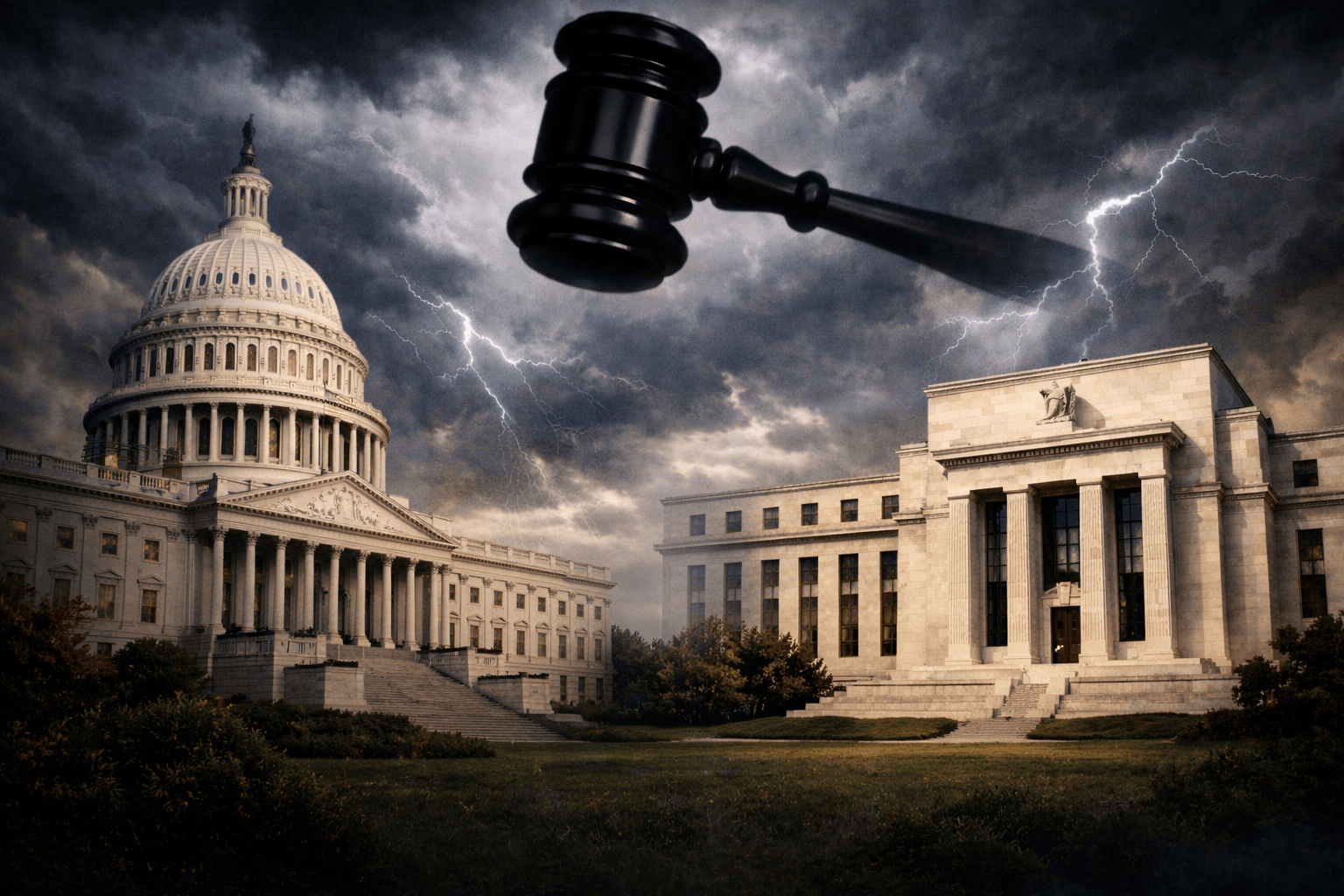
In an unusually direct escalation, the Justice Department under President Trump has served subpoenas on the Federal Reserve and threatened criminal charges tied to Chair Jerome Powell’s congressional testimony — a move widely viewed as a politicized use of prosecutorial power against an independent central bank.
Fed leadership pushed back immediately, warning that the action undermines the Fed’s independence. Markets reacted just as fast. Stocks wavered, the dollar softened, and safe-haven assets like gold moved higher as investors priced in rising institutional risk.
The concern goes well beyond a single investigation. Markets are increasingly focused on what sustained political pressure — enforced through the DOJ — could mean for interest-rate decisions, inflation control, and policy credibility. When legal authority is used to intimidate monetary policymakers, confidence erodes quickly.
And once trust in institutional boundaries breaks down, markets tend to reprice risk long before policy outcomes actually change.
How to Add ‘Crisis-Proof’ Returns to Your Portfolio It’s beaten stocks in every major downturn—and most investors still don’t own enough.
Gold & Silver Surge to New Records
Gold and silver lit up global markets Monday, with gold topping $4,600/oz and silver climbing above $85/oz — both breaking previous all-time highs as traders sought safety amid heightened uncertainty.
Investing in Physical Metals Made Easy
Precious metals have become one of the sharpest expressions of risk aversion, driven by geopolitical flashpoints and mounting political tensions involving the Federal Reserve. The rally accelerated after reports of a criminal probe tied to Fed Chair Jerome Powell and persistent conflict in the Middle East, pushing investors out of risk assets and into traditional stores of value.
Silver’s more industrial profile adds a layer of speculative momentum, but both metals’ gains highlight markets’ growing appetite for hedges against volatility and inflation pressures.
Markets Grow More Sensitive to Fed–White House Tensions
U.S. markets are showing far less tolerance for political pressure on monetary policy.
Even before the latest subpoenas, investors were uneasy about the increasingly public standoff between the White House and the Fed. What’s changed is speed. Headlines that once caused little reaction are now triggering immediate moves across stocks, bonds, currencies, and commodities.
Markets appear less willing to assume institutional guardrails will hold. Each new challenge to Fed independence has produced sharper volatility and quicker rotations into defensive assets. That suggests investors are quietly questioning a long-standing assumption: that policy credibility is a given.
Inflation adds to the sensitivity. With price pressures lingering and rate-cut expectations shifting, trust matters more than ever. When confidence wobbles, markets react first and wait for confirmation later.
That fragility isn’t limited to Washington.
Greenland Rhetoric Pushes Investors Toward Safety
Investor anxiety is also being shaped by geopolitics. Renewed threats from President Trump involving Greenland — including talk of acquisition — have unsettled global markets.
Even without concrete policy moves, the rhetoric has been enough to push money toward defense stocks and reinforce gold’s safe-haven appeal. Investors are beginning to price in tail risks, including potential strain within NATO and shifts in long-standing security alliances.
The key point isn’t likelihood — it’s uncertainty. When the global security framework feels less predictable, markets tend to favor assets that perform well when confidence erodes.
Energy markets are offering a similar lesson in reality versus rhetoric.
Investing in Physical Metals Made Easy
Trump’s Venezuela Oil Plan Faces Reality Check
President Trump’s push to revive Venezuela’s oil industry follows a dramatic U.S. military intervention that ousted President Nicolás Maduro earlier this month. The operation — described by international observers as a de facto armed intervention — signals Washington’s intent to exert influence over Venezuela’s massive crude reserves.
But major oil executives say the country remains “uninvestable.” Legal uncertainty, security risks, and commercial chaos persist despite talk of sanction relief. Even with strategic incentives, industry leaders won’t commit capital without substantial reforms and guarantees.
The clash underscores a broader market truth: geopolitical vision often collides with economic reality. In energy — as in monetary policy — execution and credibility matter as much as intent.


Post Comment