Using Bubbles to Keep Plastic Pollution From Reaching the Sea
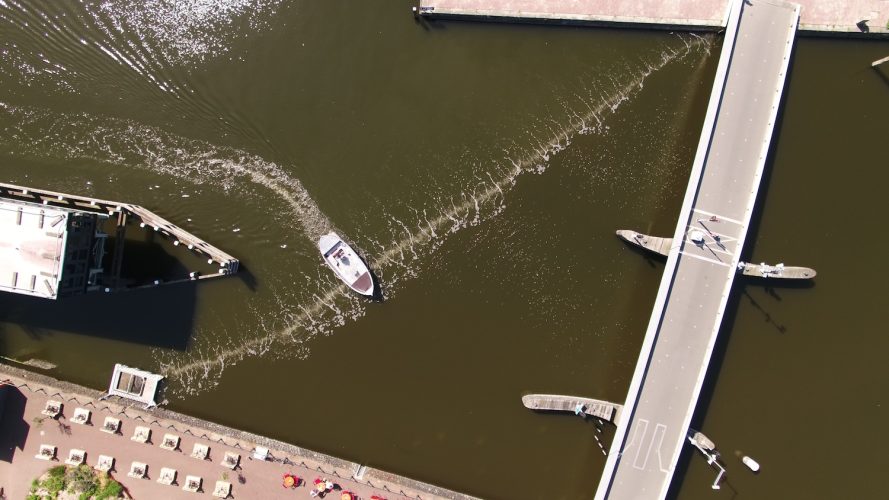
Bottles and bubbles: A good combination in more ways than one? While barriers for collecting plastic in rivers are becoming more commonplace, effervescence is an unlikely ally in this fight. But it turns out that placing a curtain of bubbles across a waterway directs plastic to the surface, where a catchment system can collect it and keep it from reaching the ocean.
This may seem like a drop in the bucket, but 70 to 80 percent of the ocean’s pollution stems from rivers and coastlines. With around 1.7 million tons of plastic ending up there each year, our oceans are literally drowning in trash. Marine life can become entangled in plastic or ingest it, leading to toxic chemical exposure, poor nutrition and even starvation. When we eat seafood, we can inadvertently consume the same plastic. And beaches and coastal environments filled with litter can deter tourists, impacting jobs and local economies.
Companies catching plastic closer to the source, like the Great Bubble Barrier, are a formidable ally for our less-than-pristine waters. Founded by a group of sailing enthusiasts, the company’s signature design was inspired by one night over a fizzy libation. Could these same bubbles help clean up the plastic they were seeing in waterways? The answer was yes, with a little technology thrown in.
Bubble power
Starting in 2017, the Great Bubble Barrier has installed barriers in cities across the Netherlands and Portugal, with plans to expand to the United Kingdom, the United States and Southeast Asia. Yet, the basic design remains the same in all locations.
“We place a perforated tube at the bottom of the waterway,” said Carla Wessels, marketing and communications director of the Great Bubble Barrier. “We push compressed air through that tube. It creates a curtain of bubbles, and the natural flow of the river then pushes plastic up against the curtain, upwards and towards the catchment system. The catchment system can then be emptied on a regular basis by the local waste authority.”
According to pilot data, the barriers capture 86 percent of plastic in rivers — ranging from 1 millimeter to 1 meter in size. The frothing walls also collect rubber, metal, wood and some vegetation. Since its installation in 2019, the company’s Amsterdam barrier has removed 80 kilograms of trash per month from the city’s canals.
“In August, we celebrated that the Bubble Barrier in Amsterdam has now collected over 1 million pieces of plastic, which is really exciting,” Wessels told 3p at Smart Cities Expo, a convention devoted to cities and urban innovation.
While effective, these barriers are not ideal for every type of waterway. The best locations are small- to medium-sized rivers close to an urban center.
Benefits of bubbly barriers
Bubbles may be an unconventional barrier, but they offer several advantages over other plastic trapping systems — often made from booms or other floating materials.
“Those traditional boom systems have a lot of value, and there are certain waterways where they’re a great solution,” Wessels said. “What makes our technology different is that we’re able to cover the full width and depth of a waterway. Booms can only cover the top, maybe, 60 centimeters of the waterway, and then it restricts the passage of boats.”
Because the bubble barriers span the full depth of the water, they also catch submerged plastics that floating barriers would miss. Certain types of plastic — like lightweight bags, film and wrappers — are more likely to be found near the bottom of rivers. And the bubble barriers don’t block the passage of boats, fish or aquatic animals, nor require much infrastructure. Plus, they have another perk.
“It’s a monitoring tool for the city,” Wessels said. “We always see ourselves as the last stop in the fight against plastic pollution. There are upstream solutions that are necessary to stop the flow of plastics into our environment and into our water.”
Waste collections from the bubble barriers reveal the types and quantities of garbage entering waterways. This allows cities to determine if policy initiatives — like banning plastic shopping bags or redesigning trash bins — are ultimately reducing water pollution, Wessels said.
Under sea level rise, bubble curtains also hold promise in preventing saltwater intrusion into estuaries and rivers.
Challenges of catching plastic
While these burbling barriers bring a lot of potential, they also come with a few bottlenecks. In addition to the initial barrier in Amsterdam, the company has set up barriers in other European cities. Although each design is similar, it takes time to adapt the barrier to new waterways.
“Since Bubble Barrier Amsterdam, we’ve changed and improved the design of our catchment system specifically,” Wessels said. “Amsterdam is an urbanized canal, much different from Katwijk [the Netherlands], which is very close to a pumping station, close to a river mouth into the ocean. Vila do Conde [Portugal] is a tidal river on the estuary. So all of these waterways are quite different. We learn every time we implement a new bubble barrier and location.”
In addition to this setup learning curve, dealing with the necessary permitting and regulations can cause delays and last-minute issues, and these steps can be hampered if city officials misunderstand the underlying issue.
“I think our main lessons have been around convincing cities about the importance of catching plastic pollution in waterways and really making the case for what is the benefit for humans, for the environment, for the city, for tourism or the economy,” Wessels said.
Rethinking river cleanup
If no action is taken to curb plastic proliferation, the amount entering the ocean is predicted to triple to 29 million metric tons by 2040. While slowing production remains essential, capturing plastic pollution is a giant step in the right direction. Despite the lack of regulation for plastic pollution on a larger scale, local initiatives are playing a vital role. And they’re not slowing down.
“We still see a lot of enthusiasm from cities, from specific regions, that they still want to do things and they still want to act,” Wessels said.


Post Comment