The Surprising Second Life of Hair Waste
When life gives you lemons, make layers instead. You may not have thought much about it, but that next visit to the salon comes with a hidden cost: waste. Each year, about 810,000 tons of human hair waste is generated worldwide, according to new research from Yildiz Technical University. Since hair is predominantly keratin, it breaks down slowly, can overcrowd landfills, and is often burned for disposal, which releases greenhouse gases.
Yet, our tresses are surprisingly useful. Companies salvage trimmings from salons and upcycle them into a variety of agricultural products like biodegradable mulch, fertilizer and compost. By promoting a range of sustainable salon practices and mitigating the environmental impact of synthetic materials, these companies are fostering greener grooming and reducing landfill waste in a single snip.
Transforming trimmings
Since their opening in 2020, Green Salon Collective has diverted over 225 tons of waste from the landfill, avoiding 14.2 tons of carbon dioxide emissions in 2025 alone, said Jess Rigg, operations and marketing manager at Green Salon Collective. The British company recycles hair, hairdressing foil, aerosol cans, towels and color tubes from salons across the United Kingdom and the United States.
“We’ve been working to get as many salons involved as possible, finding new ways for the hair to be used, trying new projects, that sort of thing,” Rigg said. “We’ve been thinking about sustainability within the industry more generally and trying to support our salons to, yes, recycle, but also conserve water, conserve energy.”
Likewise, Barcelona startup Clic Recycle collects tons of hair from salons across Spain, Portugal, France and the Netherlands. It also encourages hairdressers to get involved with environmental events, like beach clean-ups, while supplying each salon with an impact report tracking its greenhouse gas emissions, water savings and sustainable development goals.
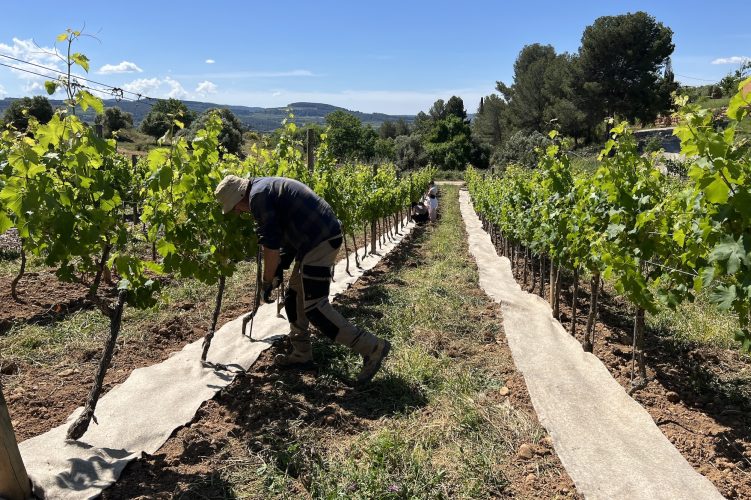
Once these companies receive and sort the hair, the locks are given a new life. Clic Recycle upcycles hair into a variety of products, including biodegradable mulch. The mulch — a mixture of hair, industrial hemp and natural vegetable fiber — is used on farms, vineyards, parks and around rivers. Once in place, it provides a variety of benefits, such as decreasing soil erosion, weeds and herbicide use, said Valérie Itey, founder and CEO of Clic Recycle. Plus, it lowers irrigation needs by 40 percent or more and breaks down in three to five years.
Farmers often turn to thin sheets of plastic in place of mulch, and this brings a few headaches. The plastic sheets typically last for only one growing season, but recycling or even removing them from the field is challenging. The resulting levels of microplastics in the soil can reduce water-holding capacity and fertility, and potentially damage crops.
“When they try to get it out, it’s so thin that it’s everywhere in the soil,” Itey told TriplePundit at the Smart Cities Expo World Congress, an event aimed at moving cities toward a better future. “So you have nanoplastic everywhere because it’s impossible to remove it because it’s so thin.”
Similarly, the Green Salon Collective composts much of its hair for use as agricultural fertilizer. Switching from synthetic fertilizer to compost is advantageous, too, since it takes less energy to produce and reduces emissions from landfills. Compost also decreases soil erosion and is less prone to runoff, which can contaminate waterways and fuel algal blooms. A compost of clippings has other perks, which Green Salon Collective learned after creating and studying potting felt made from human hair, a material used to line plant pots that is often constructed of plastics and synthetic materials.
“There is an advantage to hair breaking down slowly,” Rigg said. “It’s kind of like you’re putting a supplement pill into the pot of the plant, and over a much longer time, nitrogen is slowly going to be released. So if you don’t mind having hair or hairy compost on your farm or in your garden, then it is beneficial because it is going to work for a longer period of time.”
Research backs these observations up. For instance, one study on Tabasco peppers found that a fertilizer made from human hair promoted growth better than commercial fertilizer. Other studies show human hair can even help repel pests like rodents, deer and wild boars.
The hurdles of using hair
Despite the upsides, converting clippings has a few snags. Turning the tide against plastic use is not easy.
“I mean, it’s very complicated because plastic is a product that is already accepted and that is everywhere,” Itey said. “You need to fight over something that is not expensive, that is very cheap, that you have everywhere.”
Another hurdle is the ick factor that can come with using hair.
“A lot of people have this weird thing about hair,” Rigg said. “They’re not sure that they want it near their food that’s being grown, so there is a bit of a fine balance. The more we can prove and study it, then hopefully the more people will come around to thinking, ‘We’ve got a waste product here that we can use … Why aren’t we using it? Let’s get on board.’”
Each year, we generate an astounding 2 billion tons of municipal waste, according to the United Nations Environment Program. And only around 14 percent of salons in the U.S. and Canada have ever tried to recycle items like hair, foil or color, according to Green Circle Salons, another salon-focused recycling company.
But that’s not from a lack of interest, Rigg said.
“I think a lot of them are interested in doing something good for the environment,” she said. “It’s getting the message out there and showing that it can be financially beneficial for their business, as well. Sustainability isn’t just an extra cost. You are also going to get back quite a few things from it.”


Post Comment