Silver Charges Toward $64 as Fed Debate Heats Up
Daily News Nuggets | Today’s top stories for gold and silver investors
December 15th, 2025
Silver Nears $64 as Gold Pushes to $4,350 in Year-End Rally
Silver is making a run at $64 an ounce. Gold isn’t far behind, climbing toward $4,350 as traders chase fresh record highs.
The move comes as Treasury yields soften and expectations grow that the Fed’s next rate cut is closer than previously thought. Silver has been the standout performer, up more than 100% this year as industrial demand surges and investors pile into hard assets.
What’s driving the enthusiasm? Momentum buying, yes — but also a broader shift toward assets that don’t rely on counterparty promises. With volatility elevated across stocks and bonds, traders appear more comfortable rotating into metals that historically hold value when the macro backdrop gets murky.
When both monetary and industrial demand fire at once — as we’re seeing with silver — the moves can be dramatic. And when gold sets new highs while real yields fall, it often signals the market is bracing for more economic uncertainty.
Investing in Physical Metals Made Easy
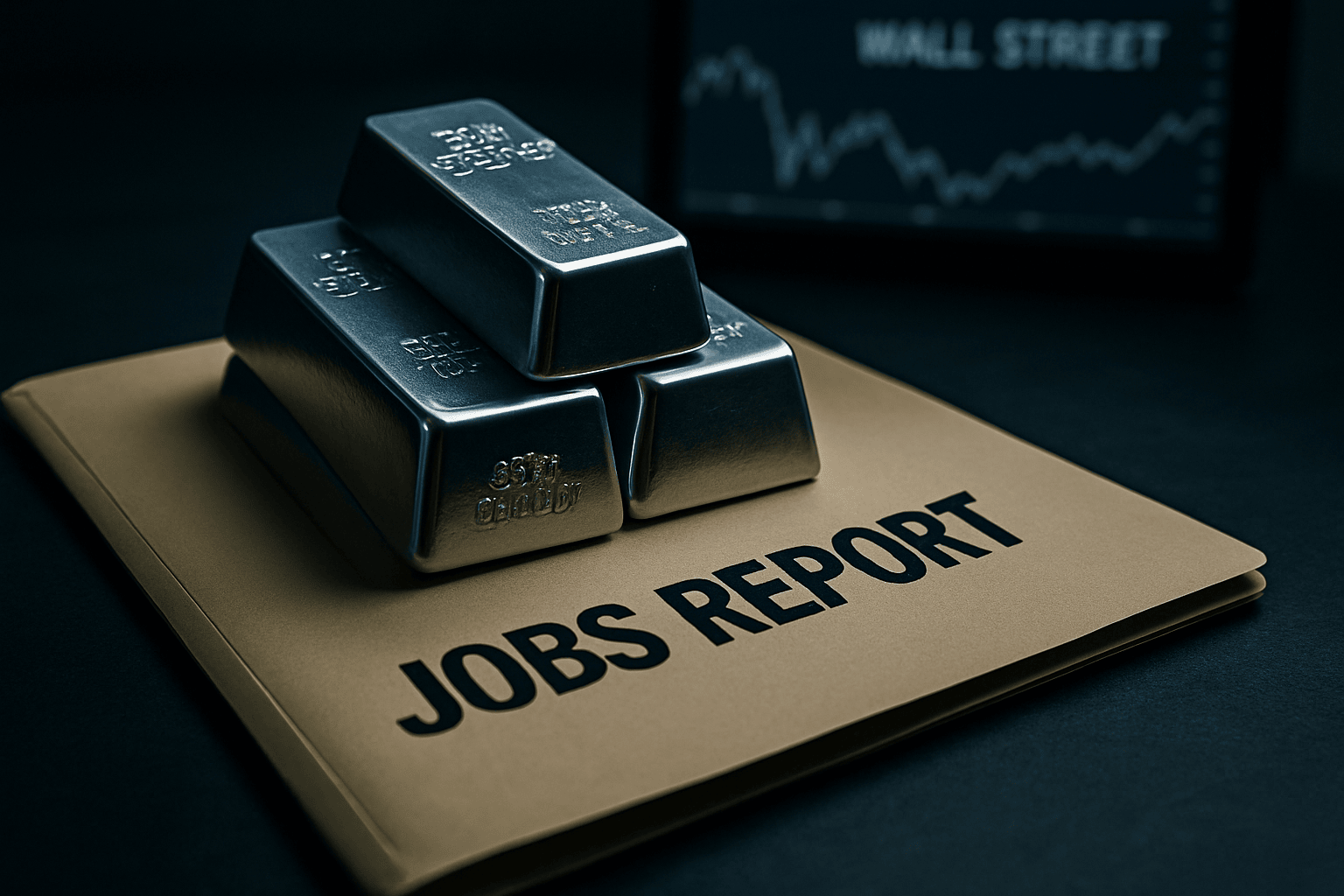
A Big Tuesday Ahead: Markets Brace for Two Jobs Reports
Wall Street is gearing up for a rare double-dose of employment data Tuesday. Both the JOLTS openings report and the ADP private payrolls release land the same morning.
Economists expect job openings to continue drifting lower — a sign the labor market is cooling but not collapsing. ADP is forecast to show steady hiring, though wage growth remains the wild card.
Investors are watching closely because the labor market sits at the center of the Fed’s decision-making. Softer data would reinforce expectations for a September rate cut — a scenario markets are increasingly leaning toward.
If Tuesday’s numbers confirm slowing momentum, it strengthens the case for lower rates. That historically supports gold and silver by reducing the opportunity cost of holding them. If the data surprises to the upside, expect volatility across all asset classes as traders reassess the Fed path.
Korea Zinc Weighs U.S. Joint-Venture Smelter to Tap IRA Incentives
Korea Zinc — the world’s largest lead and zinc producer — is exploring building a U.S. smelter under a new federal joint-venture structure. The goal: qualify more of its output for Inflation Reduction Act subsidies and strengthen supply chains for critical minerals used in batteries, solar panels, and electronics.
The proposal is still under discussion at the board level, but the strategic rationale is clear. U.S. policymakers want more processing done domestically. Mineral producers want access to billions in incentives. A stateside smelter could reshape where key industrial metals are refined — potentially reducing U.S. reliance on China for processing capacity.
The investor angle: Any shift in global refining infrastructure tends to ripple across metals markets. While this isn’t directly about gold or silver, it underscores a broader theme — governments are prioritizing resource security. Historically, when nations compete for metals capacity, hard-asset prices benefit from tighter supply chains and geopolitical friction.
Oil Climbs on U.S.–Venezuela Tensions, Raising Inflation Concerns
Crude prices jumped Monday after the U.S. signaled it may tighten sanctions on Venezuela following an escalation in diplomatic tensions. Brent crude pushed past $80 a barrel. Traders are increasingly positioning for supply disruptions that could squeeze an already fragile energy market.
Higher oil prices tend to work their way through the economy quickly — lifting transportation costs, pressuring corporate margins, and reigniting inflation anxieties just as central banks attempt to guide prices lower. The bond market reacted immediately, with breakeven inflation expectations ticking up.
If energy prices heat up again, the Fed may face a tougher balancing act between inflation control and growth concerns. Historically, periods of energy-driven inflation have boosted safe-haven demand for gold, which tends to outperform when real rates fall or price pressures rise faster than yields.
Fed’s Miran Argues Inflation Isn’t What It Seems — Policy “Too Tight”
Federal Reserve Governor Stephen Miran doubled down Sunday on his call for aggressive rate cuts, arguing that current inflation readings don’t reflect genuine supply-demand pressures in the economy.
Speaking to Bloomberg, Miran said shelter inflation will ease as pandemic-era rent spikes normalize. He also contended that services inflation won’t see upward pressure thanks to a cooling labor market. Some inflation components, like portfolio management fees, are statistical quirks rather than what consumers actually experience.
The takeaway: Miran believes the Fed is fighting ghosts. With rates still between 3.5% and 3.75%, he thinks policy remains unnecessarily restrictive.
This isn’t an isolated view. Miran has dissented at multiple recent FOMC meetings, pushing for half-point cuts instead of quarter-point moves. He’s part of a growing dovish faction that sees labor market weakness as the bigger risk.
For metals, his argument strengthens the case for deeper cuts ahead — exactly the setup fueling this year’s rally.
How to Add ‘Crisis-Proof’ Returns to Your Portfolio It’s beaten stocks in every major downturn—and most investors still don’t own enough.



Post Comment