TriplePundit • Telemedicine Turns The Tide For Women with Diabetes in Rural Zimbabwe
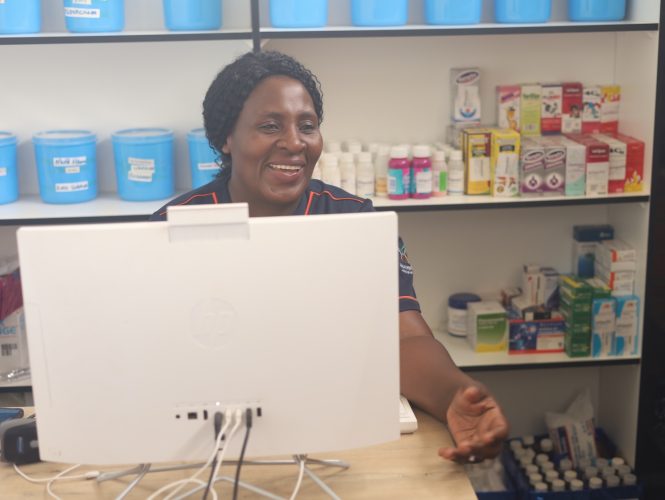
Elizabeth Ndadziona is sitting on a bench waiting for her turn to enter the telehealth facility at a post office in Hauna, a rural commercial center in eastern Zimbabwe’s Honde Valley. The 42-year-old came for a medication refill after she was diagnosed with diabetes at the same health center in early 2025. She walked from Baradza, a more than one-hour drive north of Mutare, Zimbabwe’s third-largest city. Even with the long journey, the Hauna Community Digital Health Center makes healthcare more accessible for Ndadziona, who may not be able to see a doctor otherwise.
Honde Valley survives on a tourist and agricultural economy. It’s surrounded by tea estates, banana plantations and green hills. Though Hauna Post Office’s once-brightly painted walls are faded, showing the strains of time on this rainy afternoon, it continues to provide warmth, particularly to women battling noncommunicable diseases like cardiovascular diseases, cancers, chronic respiratory diseases or diabetes.
Noncommunicable diseases are responsible for more than 70 percent of global deaths, according to the World Health Organization. Their rise in countries like Zimbabwe comes as health systems are already under strain. Many of these diseases disproportionately impact women due to limited healthcare access and increased risk factors, especially in low- and middle-income countries.
On a given day, the Hauna telehealth center’s waiting corridor is crowded with patients sitting nervously on metal benches as they wait for their turn. Opened in June 2024, the Hauna Community Digital Health Center stationed inside the post office is run by ZimSmart Villages, an initiative harnessing technology to improve healthcare access across the country. As a part of that work, telemedicine — or providing clinical services remotely through phone or video calls between the patient and a doctor — has become popular.
The healthcare access gap
Zimbabwe’s defunct public health system is grappling with shortages of basic medicines like paracetamol and healthcare workers. Nurses and doctors are leaving for better working conditions and salaries in countries like the United Kingdom and the United States. The doctor-to-patient population ratio in the southern African nation of 15 million people is low, at 1 to 5,000. In rural areas, the ratio is even worse.
Ndadziona still recalls the beginning of her struggle with diabetes. When she first felt pain, she could not access a hospital, as they often have long queues and it takes days to secure a consultation with the doctor. “I was feeling thirsty. I could drink more than two liters of water per day,” she told TriplePundit. “I bought a blood glucose meter to test the sugar levels in my body, but everything seemed normal.”
After suffering from more symptoms in January, Ndadziona tested herself again, and the sugar levels in her blood were high. “My friend from the village told me about the telehealth facility,” she said. “That was when I came for consultation.”
In rural areas like Hauna, internet connectivity used to be unreliable, making video consultations impossible. But with access to the high-speed internet Starlink, ZimSmart Villages now conducts real-time, uninterrupted teleconsultations, enabling rural patients to access high-quality care previously limited to urban centers. Women can walk into the center and immediately access services without long queues.
Ndadziona said she had doubts about using technology to provide healthcare remotely because she was used to consulting a doctor in person, but those fears subsided after her first visit. “I talked to a doctor via a video call. The nurse inserted an intravenous drip to deliver medications into my veins for some hours,” she said. “After about two days, [my blood sugar] was normal. I was so relieved.”
As farmer in the Honde Valley community with two children to feed, Ndadziona cannot afford private health facilities. At the telehealth center, consultation fees range from $5 to $10 and the medicine is subsidized.
Ndadzonia has since referred many of her friends and relatives to the center.
Most women living in rural areas struggle seeking healthcare for noncommunicable diseases, not only because of long travel distances and unaffordable costs, but also competing caregiving responsibilities, said Admore Jokwiro, chief medical officer at ZimSmart Villages, which operates the Hauna center. “Women often prioritize household needs over their own health, meaning conditions like hypertension and diabetes remain undiagnosed until complications occur,” he said. “Our telehealth initiative directly addresses these barriers by improving access, affordability and convenience. We bring screening, diagnosis and follow-up care closer to where women live.”
Out of the 4,973 people screened at the Hauna telehealth center, 3,698 are women, said Alsandrah Kuvaoga, business development manager at ZimSmart Villages. About 70 percent of the women who tested positive for a noncommunicable disease had never been screened before, showing the breadth of the access gap.
Closing the gap
Jessica Monzora, who was visiting the telehealth center for her monthly checkup, said she once spent a week trying to see a doctor at a local hospital when her blood pressure was high. “When I heard about this initiative from friends, I quickly came here,” the 42-year-old said.
Monzora relies on her income from vending at the Hauna commercial center to feed and clothe her three children and was already taking blood pressure medication when she first came to the telehealth center. After speaking to the doctor via video call, her medicine was changed, and her blood pressure normalized after a few days.
In these ways, the initiative is easing the burden of noncommunicable diseases on women, Memory Difura, a registered nurse who works at the center, said as she looked out a window onto the corridor full of women. When a patient comes, nurses book a consultation, conduct vital observations, and share a report with the doctor via the online platform.
“The doctor will conduct his or her investigations and upload a prescription via the platform,” said Difura, who worked at a government hospital for more than a decade before the telehealth center. “I give medication and administer injections. Patients have an option to buy medicine here or at any pharmacy.”
When Difura is not diagnosing and treating diseases like diabetes, she is educating local women about a healthy lifestyle. She checks sugar levels for free, screens for cervical cancer, encourages women to exercise regularly and teaches them self-breast examination techniques.
Women already diagnosed with chronic conditions are enrolled in the center’s remote monitoring ward, where a nurse like Difura follows up regularly via telehealth calls. This support improves adherence, early detection of complications and overall disease management. “The center is giving people hope. Many believe they are about to die when they become chronically ill,” she said. “We are making a difference.”
Noncommunicable diseases are not only medical conditions, but can also be driven by lifestyle, information gaps and delayed health-seeking behaviors, ZimSmart Villages’ Jokwiro said. “Our approach is therefore rooted in prevention, health education and community engagement,” he said. “During our community health days and medical outreaches, we conduct sessions on nutrition, physical activity, and early warning signs for conditions such as hypertension, diabetes and cervical cancer.”
Still, there’s room for improvement. The post office where the Hauna telehealth center is stationed is a shared space, so it does not provide patient privacy. “There is a need for a bigger space and a quiet room for bed rest, which offers privacy to patients,” Ndadziona said.
The center is exploring options for larger, better-equipped spaces as it expands. “Improving privacy and comfort is a priority in our next phase of infrastructure development,” Jokwiro said. “Many women view our centers as the first safe, affordable and respectful places to seek care, so we welcome the fact that expectations are rising.”
The center is also rolling out digital health promoters that will allow women to receive care privately in their own homes, including screenings, follow-ups and consultations, he said.
ZimSmart Villages’ telehealth centers have already expanded to 28 locations across the country, up from about 17 at the end of 2024, the organization’s Kuvaoga said. About 43,000 people have been screened across all of them.
Back in Hauna, Ndadziona’s sugar levels have been normal since she started taking medication, but she keeps monitoring them at home. “Once high, I will run to the center,” she said.



Post Comment