USD/ZAR Slides as South African Rand Gains on Record Gold Prices, but Risks Linger
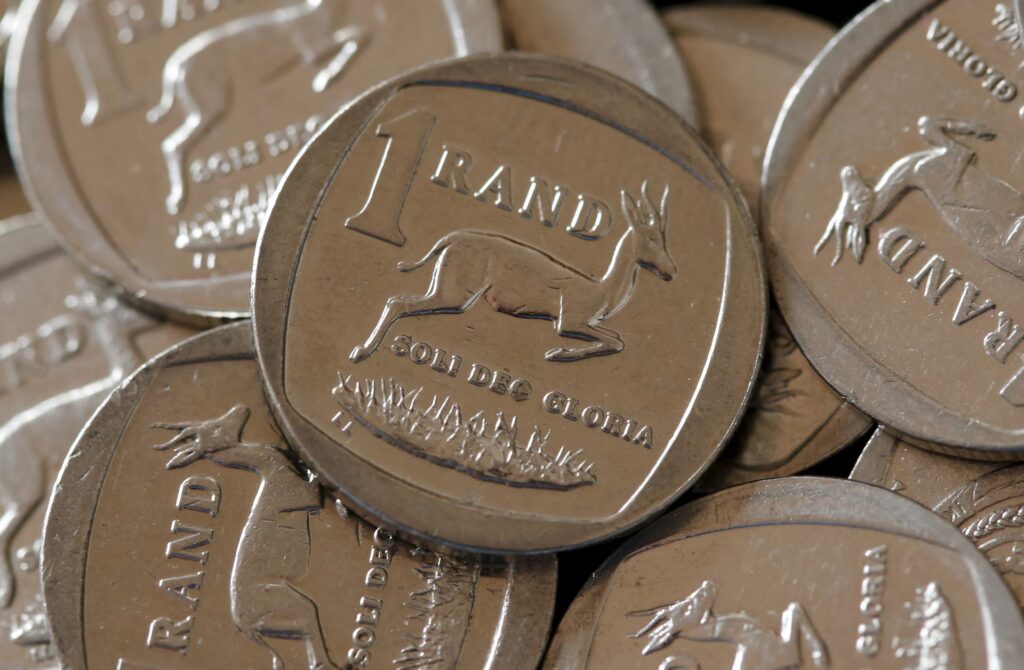
- USD/ZAR is trading lower as the South African rand strengthens on record-high gold prices
- Safe-haven demand for precious metals has boosted South Africa’s export outlook
- The rand’s rally remains vulnerable to geopolitical risks and policy uncertainty
- Technical indicators point to further downside in USD/ZAR, though volatility risks persist
USD/ZAR has moved lower in early Monday trade as the South African rand extends its recent gains, supported by a fresh surge in gold prices. The rand strengthened to its firmest levels in more than three years after gold climbed above $4,600 per ounce, reinforcing South Africa’s terms of trade and improving near-term sentiment toward the currency.
As reported by Reuters, the rand was trading around 16.42 per dollar during early European hours, continuing a rally that saw it finish 2025 nearly 13% stronger against the US dollar. The move reflects renewed safe-haven demand for precious metals amid geopolitical uncertainty and softer US labour data, both of which have weighed on the dollar.
Gold Rally Lifts the Rand, Strengthens Export Outlook
The rally in gold and other precious metals has been a key driver of rand strength. As a major exporter of gold, platinum, and silver, South Africa benefits directly from higher prices, which improve export revenues and ease external financing pressures.
Investors have increasingly turned to precious metals as geopolitical risks intensify, boosting commodity-linked currencies such as the rand. The supportive backdrop has helped USD/ZAR extend its decline after breaking below key psychological levels earlier this year.
However, while commodity support has been powerful, it remains cyclical. Market participants are cautious about extrapolating current gains too far, particularly if global risk sentiment shifts.
Geopolitical Risks Could Test Rand Confidence
Despite the rand’s strong start to 2026, emerging geopolitical risks could challenge the rally. Ongoing military exercises involving South Africa alongside countries such as China and Iran have drawn international attention and may complicate relations with the United States.
Concerns have also resurfaced around potential trade measures, with the risk that further tariffs or sanctions could be introduced if diplomatic tensions escalate. While South Africa’s exports to the US have so far proven resilient, markets remain sensitive to any developments that could undermine investor confidence.
Improving Domestic Backdrop Offers Support
On the domestic front, economic conditions have shown signs of stabilisation. Inflation has eased to 3.5%, comfortably within the South African Reserve Bank’s target range, giving policymakers room to support growth. The economy expanded by around 1.2% in 2025, reflecting a modest recovery after earlier weakness.
Power supply constraints have also improved, with load-shedding largely curtailed, helping to stabilise business activity. Credit rating sentiment has turned more constructive, with at least one major agency revising South Africa’s outlook to positive, supporting longer-term confidence in local assets.
At the same time, the central bank has begun easing policy cautiously, cutting interest rates from 7.0% to 6.75%, while signalling a gradual approach to further adjustments.
USD/ZAR Technical Outlook: Downtrend Remains Intact
From a technical perspective, USD/ZAR remains firmly under bearish pressure on the daily chart. The pair continues to trade below its 20-day moving average and along the lower Bollinger Band, highlighting sustained downside momentum rather than a temporary pullback.
Price action remains contained within a descending channel, with rallies capped quickly and sellers retaining control. The lack of meaningful bullish candles suggests that demand for dollars remains weak against the rand at current levels.
The MACD reinforces this view, remaining in negative territory with no clear signs of bullish divergence. Momentum continues to favour the downside, pointing to trend continuation rather than exhaustion.
Immediate support is located near 16.30, aligned with the lower Bollinger Band. A sustained break below this level would expose the 16.00–15.70 zone. On the upside, resistance is now clearly defined near 16.65–16.90, where the mid-Bollinger Band and short-term averages converge. A move back above this area would be required to ease bearish pressure.
USD/ZAR Outlook: Strength Supported, but Fragile
The near-term outlook for USD/ZAR remains tilted to the downside as long as the pair trades below key moving averages and momentum indicators remain negative. While short-term pauses are possible after recent declines, the broader structure continues to favour rand strength unless price reclaims the 16.90 area decisively.
While further gains are possible, markets remain cautious about chasing the rally aggressively. Consolidation or renewed volatility cannot be ruled out if external conditions change.
Writer’s Trade Idea: My preferred strategy is to sell USD/ZAR on rebounds toward 16.80, targeting a move toward 15.70, while placing a stop-loss above 17.05.
USD/ZAR is moving lower as the South African rand strengthens on record-high gold prices and improved risk sentiment. Technically, the pair remains under bearish pressure, trading below key moving averages and along the lower Bollinger Band.
Yes. The daily chart shows USD/ZAR holding within a descending channel, with momentum indicators such as the MACD remaining in negative territory. As long as the pair stays below resistance near 16.65–16.90, the downtrend remains intact.
Immediate support is located near 16.30, followed by the 16.00–15.70 zone if selling continues. On the upside, resistance is seen around 16.65 and 16.90, where rebounds are likely to face renewed selling pressure.



Post Comment